#1 – Technological overview
The RFID Weapon Tracking technology

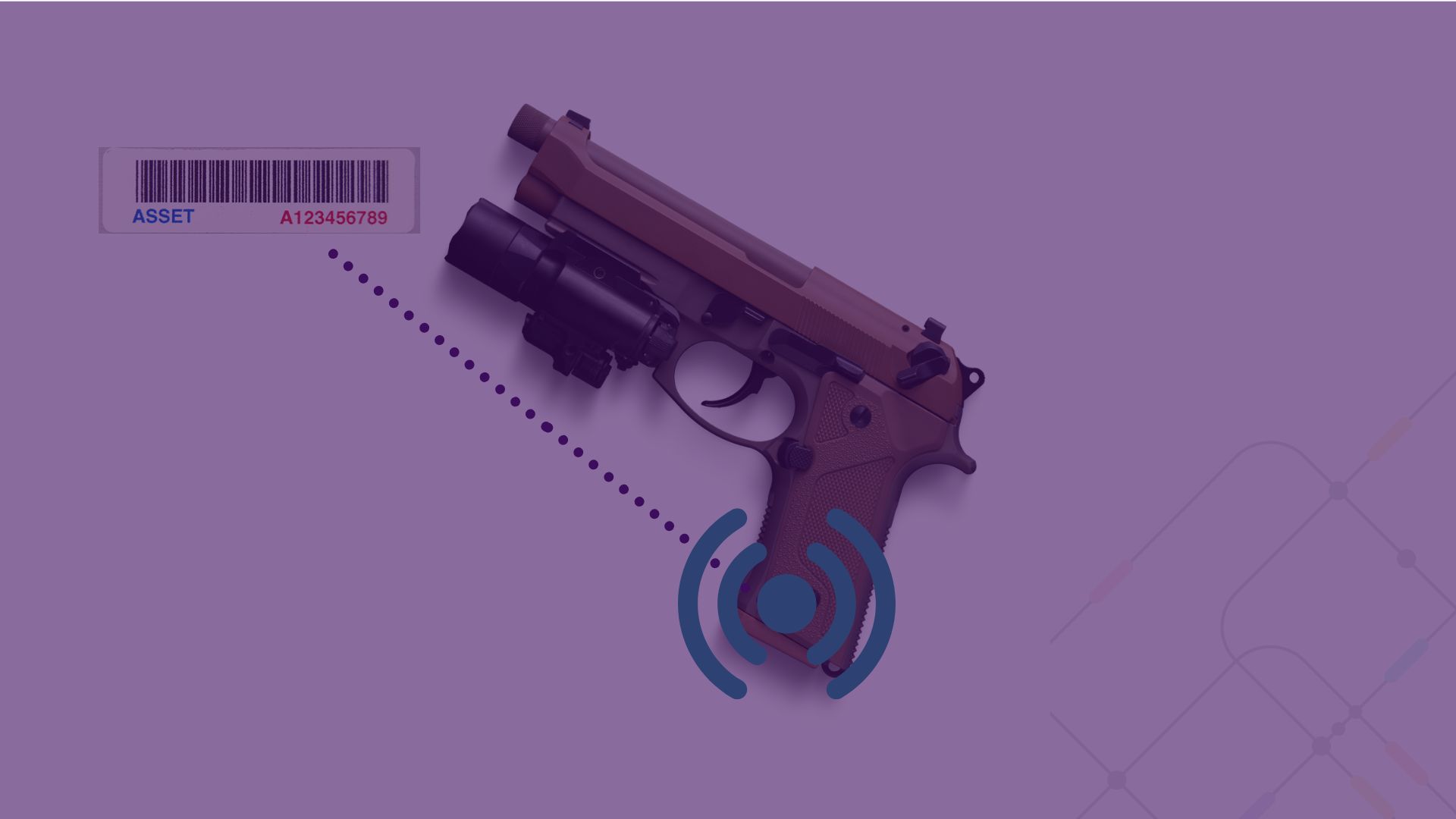
Radio Frequency Identification (RFID) uses electromagnetic fields to automatically identify and track tags attached to weapons. Tags store data electronically and can be scanned without direct line of sight — even through walls, cases, or packaging — at ranges of a few centimeters to several meters, depending on frequency.
Passive RFID weapon tracking tags require no battery, drawing power from the reader’s signal. Active RFID tags carry a battery and can broadcast signals continuously, enabling real-time location tracking across large facilities.

The Barcode Weapon Tracking Technology

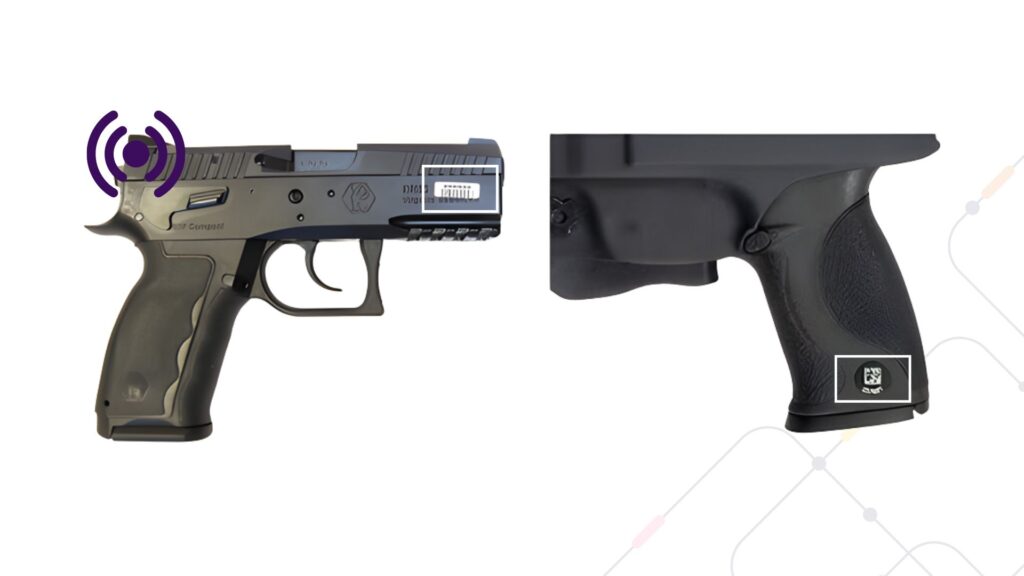
Barcode systems encode weapon identification data in a pattern of parallel lines (1D) or a matrix of squares (2D/QR). A scanner or camera must have direct, unobstructed visual access to read a code. They are the incumbent standard in defense logistics — proven, inexpensive, and universally understood.
Modern 2D barcodes like QR codes and Data Matrix can encode serial numbers, unit assignments, and maintenance records in a compact form. They rely entirely on manual scan events or fixed-point camera systems.
#2 – Technical Comparison
| Parameter | RFID | Barcode |
| Read Range | Up to 10–15 m (UHF passive); unlimited (active) | Typically 0–60 cm; requires close proximity |
| Line of Sight | Not required — reads through cases, holsters, bags | Mandatory — tag must be visible and undamaged |
| Scan Speed | Hundreds of tags per second simultaneously | One at a time — manual or fixed-camera |
| Data Capacity | Up to 64 KB (rewritable EEPROM) | ~3 KB max (QR); ~100 bytes (1D) |
| Durability | Excellent — encapsulated, waterproof rated | Moderate — scratches/dirt degrade readability |
| Real-time Tracking | Yes — continuous location updates possible | No — point-in-time scan events only |
| Tampering Detection | Detects unauthorized removal or movement | No alert for missing or relocated weapons |
| Environmental Resist | IP67/IP68 rated; extreme temp tolerance | Labels degrade in moisture, heat, chemicals |
| RF / COMSEC Risk | Susceptible to jamming; needs Faraday shielding | Passive — zero RF emissions, no signal risk |
| Integration Complexity | Complex middleware, EPC/Gen2 compliance required | Simple — works with virtually any inventory system |
| Audit Trail Quality | Automatic, timestamped, chain-of-custody logs | Manual scan-dependent — human error risk |
#3- Tactical Assessment
RFID Weapon Tracking Advantages
- Automated inventory audits without manual scanning — dramatically reduces armory check time
- Simultaneous multi-tag reads — entire weapon racks inventoried in seconds
- Real-time chain-of-custody with timestamped access logs
- No line-of-sight — reads through holsters, cases, and storage containers
- Alert triggers for unauthorized weapon movement, supporting theft prevention
- Rewritable tags allow dynamic updates — assignment changes, maintenance logs
- Reduces human error in high-pressure check-in/check-out procedures
- Active tags support GPS integration for field-level geolocation
Barcode Weapon Tracking advantages
- Extremely low cost per label — ideal for mass deployment across large arsenals
- Simple, battle-tested technology with near-zero learning curve
- No RF emissions — inherently COMSEC-safe in sensitive environments
- Works with legacy inventory systems without costly overhaul
- Handheld scanners are cheap, rugged, and globally available
- 2D QR codes store rich data: serial numbers, model, maintenance, assignment history
- No battery or power source required — entirely passive technology
RFID Weapon Tracking Limitations
- Requires manual, one-at-a-time scanning — slow for large inventories
- Direct line of sight mandatory — holstered or racked weapons cannot be scanned
- Labels degrade under field conditions: moisture, abrasion, extreme temperatures
- No real-time tracking — inventory only as current as the last scan event
- Cannot detect unauthorized weapon movement between scan events
- Human-dependent process introduces error risk under pressure
- Read-only — cannot update embedded data after printing
#4 – Deployment Scenarios
National Armories
Thousands of weapons in controlled facilities with automated check-in/check-out portals and 24/7 surveillance integration.

Police Armories
High-frequency check-out cycles require rapid processing. RFID gates automate officer-weapon assignment tracking.
Evidence Rooms
Chain-of-custody is legally critical. RFID provides tamper-evident, automated audit trails for legal proceedings.
Maintenance Depots
Individual weapon inspection and service logging. Barcodes carry service history updated at each maintenance station.

Remote Filed Deployments
No infrastructure available. Handheld scanners with offline sync are lightweight, battery-efficient, and field-proven.
Budget-Constrained Programs
Programs with tight procurement budgets benefit from barcode’s near-zero per-unit cost and minimal infrastructure overhead.

#5 – Our Verdict
For high-security, high-volume weapon tracking environments — military armories, law enforcement facilities, evidence storage, and national stockpile management — RFID weapon tracking tags is the superior choice. The operational efficiency gains, automated audit trails, real-time accountability, and tamper-detection capabilities justify the higher upfront investment many times over.
However, barcode systems remain the pragmatic choice for budget-limited programs, remote field operations, maintenance depots, and any environment where RF emissions are a COMSEC concern. Their simplicity, reliability, and near-zero cost make them irreplaceable in decentralized or resource-constrained contexts.
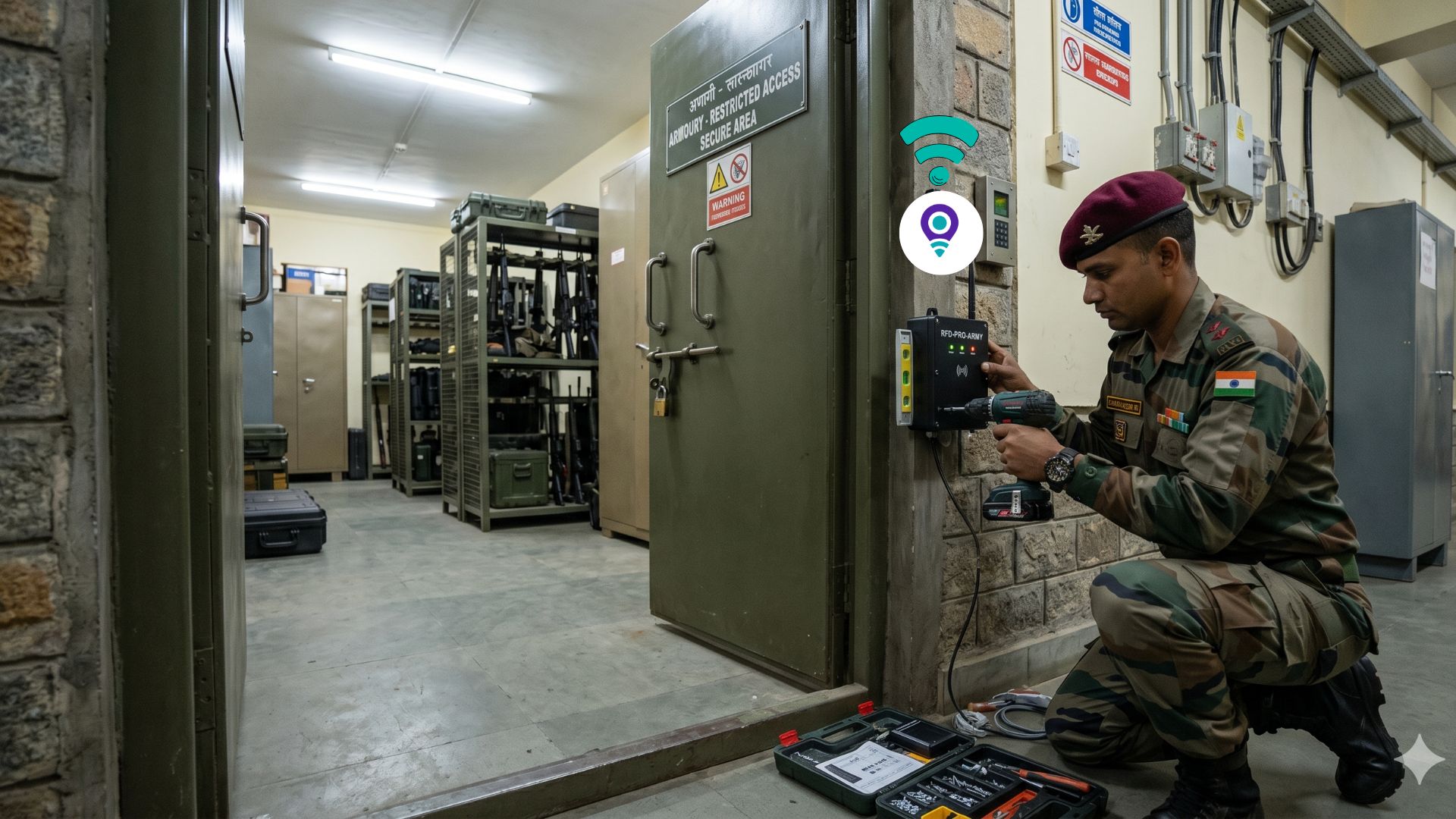
The optimal strategy is hybrid deployment: RFID at fixed, controlled points (armory doors, transfer stations, storage racks) for automated real-time accountability — backed by 2D barcodes on every weapon for field-level identification, maintenance logging, and failsafe backup when RF infrastructure is unavailable.