
Warehouse inventory management begins when goods arrive at your facility. The receiving process is one of the most critical points for maintaining inventory accuracy and accountability. Discrepancies between what was ordered and what was received can cause costly delays and operational problems.
Enter IoTWarehouseTracker, a sophisticated platform designed to seamlessly bridge the gap between your procurement systems and your physical inventory.
With its automated material check-in process, IoTWarehouseTracker ensures complete, end-to-end accountability from the very second goods hit the loading dock.
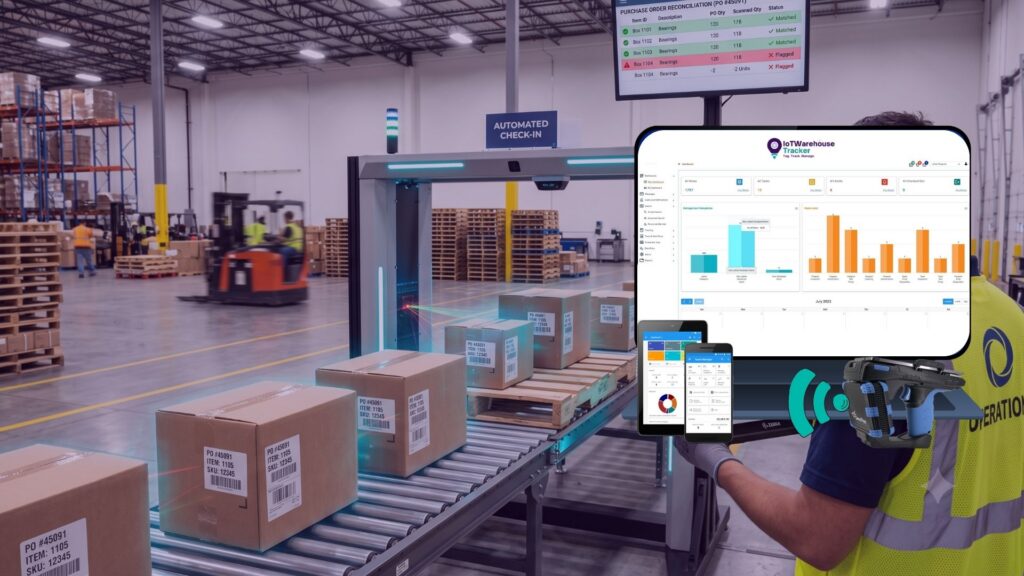
Automated Receiving for Better Warehouse Inventory Management
Traditionally, manual receiving leaves room for human error, misplaced paperwork, and mismatched deliveries. IoTWarehouseTracker completely eliminates this bottleneck by acting as an uncompromising digital gatekeeper. As items arrive at the facility, the software automatically reconciles every physical unit against your existing Purchase Orders (POs) and ERP data, improving warehouse inventory accuracy.
- Immediate Error Catching: This automated verification process acts as an immediate safeguard against vendor mistakes or shipping anomalies.
- Financial Accuracy: It prevents discrepancies from entering your inventory ecosystem, ensuring that you only pay for exactly what you receive.
- Ecosystem Sync: Ultimately, procurement is perfectly synced with actual warehouse stock, ending the disconnect between purchasing and the warehouse floor.
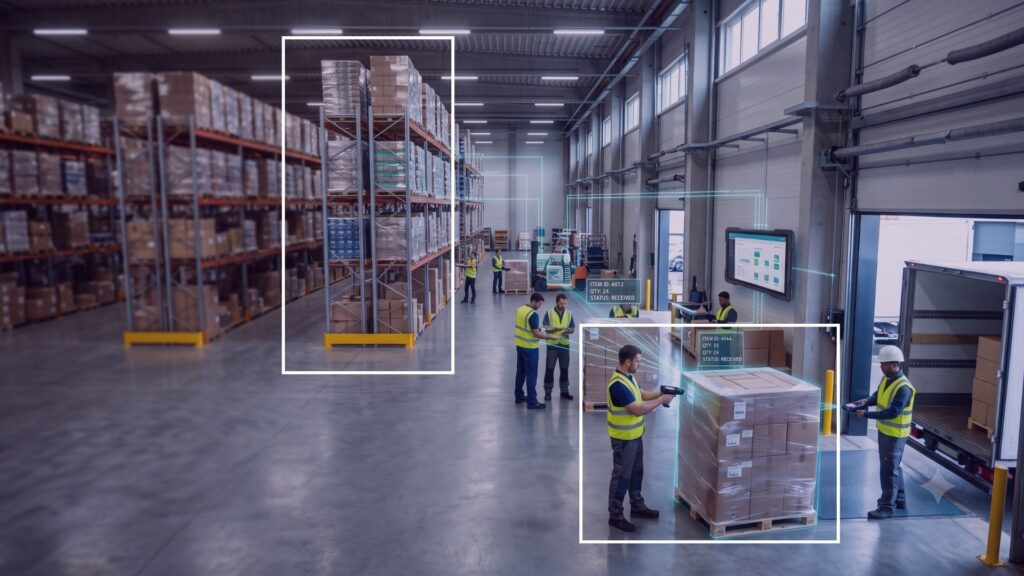
Intelligent Storage and Warehouse Inventory Location Management
Receiving the right goods is only half the battle; storing them efficiently is just as important. Accurate location management is an important part of warehouse inventory management, helping teams know where inventory is stored and reducing misplaced stock. Once a delivery is verified, WarehouseTrackerIoT doesn’t just leave operators guessing where to put the pallets. The system utilizes intelligent logic to automatically assign each checked-in item to its optimal storage location.
- Velocity-Based Routing: The software prioritizes fast-moving goods near the shipping bays to reduce operator travel time.
- Strict Compliance: It guarantees adherence to specific temperature requirements and ensures compatible materials are grouped together.
- Dynamic Footprint: By executing these rules, the platform optimizes your warehouse footprint dynamically, preventing wasted space.
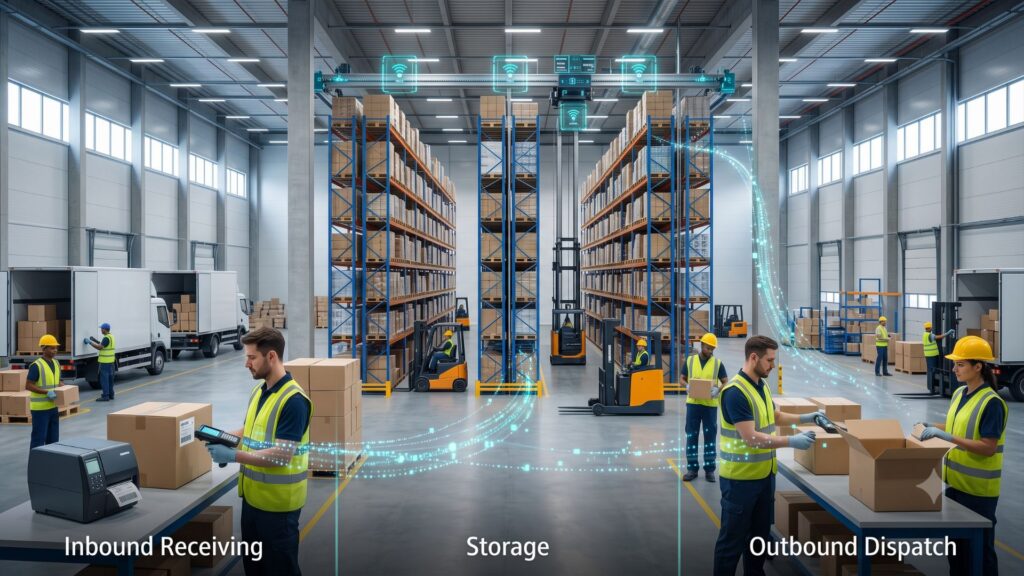
Streamlining Inbound and Outbound Workflow
Efficient material handling is the backbone of successful warehouse inventory management. Tracking inventory as it moves through inbound and outbound workflows helps maintain accurate records and improve inventory accountability.
- Inbound Intake: Simplify material intake with barcode scanning for automated verification against purchase, production, and transfer orders.
- Smart Labeling: Generate and affix barcode or QR code labels for warehouse inventory tracking, with auto-calculated label generation based on pack size and quantity.
- Outbound Efficiency: Implement FIFO (First-In, First-Out) or FEFO (First-Expired, First-Out) picking logic for faster, more accurate order processing.
- Shipment Validation: Enable real-time shipment validation with handheld terminals to ensure accurate and reliable order dispatch.
Data-Driven Analytics and Alerts
Staying ahead of inventory shifts prevents costly bottlenecks. IoTWarehouseTracker leverages powerful, intuitive data tools to keep managers informed at a glance:
- Real-Time Notifications: Receive automated alerts on low stock levels, order status, and expiry warnings.
- Duration Tracking: The warehouse tracking system tracks inventory duration by categorizing stock based on expiry periods, enabling better stock rotation and informed purchasing decisions.
- Comprehensive Dashboards: Visualize storage efficiency and export tailored reports for deeper analysis and performance monitoring.
RFID and Barcode Technology for Warehouse Inventory
At the core of automated warehouse inventory management are scanning technologies such as barcode and RFID. IoTWarehouseTracker uses these technologies to identify inventory and update records as items move through the warehouse.
- Triggered Workflows: A quick scan does more than just log the receipt – It triggers a chain reaction of automated stock level updates.
- Zero-Lag Inventory: Inventory is incremented upon arrival or decremented upon dispatch with zero lag time.
- Departmental Alignment: This creates a beautifully seamless handoff between purchasing and warehouse operations, keeping all departments aligned with accurate, real-time data.
Choosing the Tags
Choosing the right warehouse inventory management technology depends on inventory volume, scanning requirements, storage conditions, and the level of accuracy required. Using a combination of RFID tags and QR codes can support both rapid inventory counting and detailed item-level identification.
Here is a breakdown of why combining these two technologies creates a highly resilient warehouse environment:
RFID for Faster Warehouse Inventory Management
RFID can support rapid warehouse inventory counting and bulk inventory checks across pallets, racks, and storage areas.
- Non-Line-of-Sight Scanning: Operators can count entire pallets or sections of racking simultaneously without physically seeing or pointing a laser at each individual tag.
- Rapid Cycle Counts: As you move through the aisles, the system can instantly reconcile physical counts against your ERP, flashing green for “Found” or red for “Missing” in real-time.
- Labor Reduction: It drastically cuts down the human hours required for standard, facility-wide stocktaking routines.
QR Codes: Ensuring Precision and Detail
While RFID handles the sheer volume and speed, QR codes provide the granular detail and accessibility needed for specific tasks on the warehouse floor.
- High Data Capacity: Unlike traditional 1D barcodes, QR codes can hold extensive information directly on the label, including batch numbers, manufacturing dates, and FEFO (First-Expired, First-Out) routing data.
- Accessible Backup: If environmental interference, such as metal or liquids, damages or makes an RFID tag unreadable, standard mobile tablets and handheld devices can scan a QR code as a reliable backup.
- Targeted Picking: QR codes are highly effective for pick-and-pack operations where operators need to verify specific units before dispatching an order.
The Synergistic Advantage
By utilizing both technologies, you can capture bulk movements instantly via RFID at dock doors or receiving zones. Individual picking, packing, and quality assurance inspections can then rely on the precision of QR scans.
Conclusion: Improving Warehouse Inventory Management and Accountability
Complete accountability shouldn’t be a luxury; it should be the operational standard. By leveraging automated check-ins, intelligent storage routing, and robust RFID/Barcode technology, TrackerIoT transforms the often-chaotic receiving dock. It creates a streamlined, error-free gateway for incoming inventory. Facilities can experience the peace of mind that comes with knowing every asset is tracked, verified, and optimally stored from the moment it arrives.